

Buying a home is one of the most important financial and personal decisions you will make. Whether you are a first-time home buyer or looking to upgrade to a larger property, starting your home search the right way can save time, money, and stress. With thousands of options available in today's real estate market, having a clear plan helps you find a home that matches your lifestyle, budget, and long-term goals.
Define Your Home Buying Goals
The first step in your home search is understanding why you want to buy a property.
- Are you looking for a family home,
- an investment property,
- or a future retirement residence?
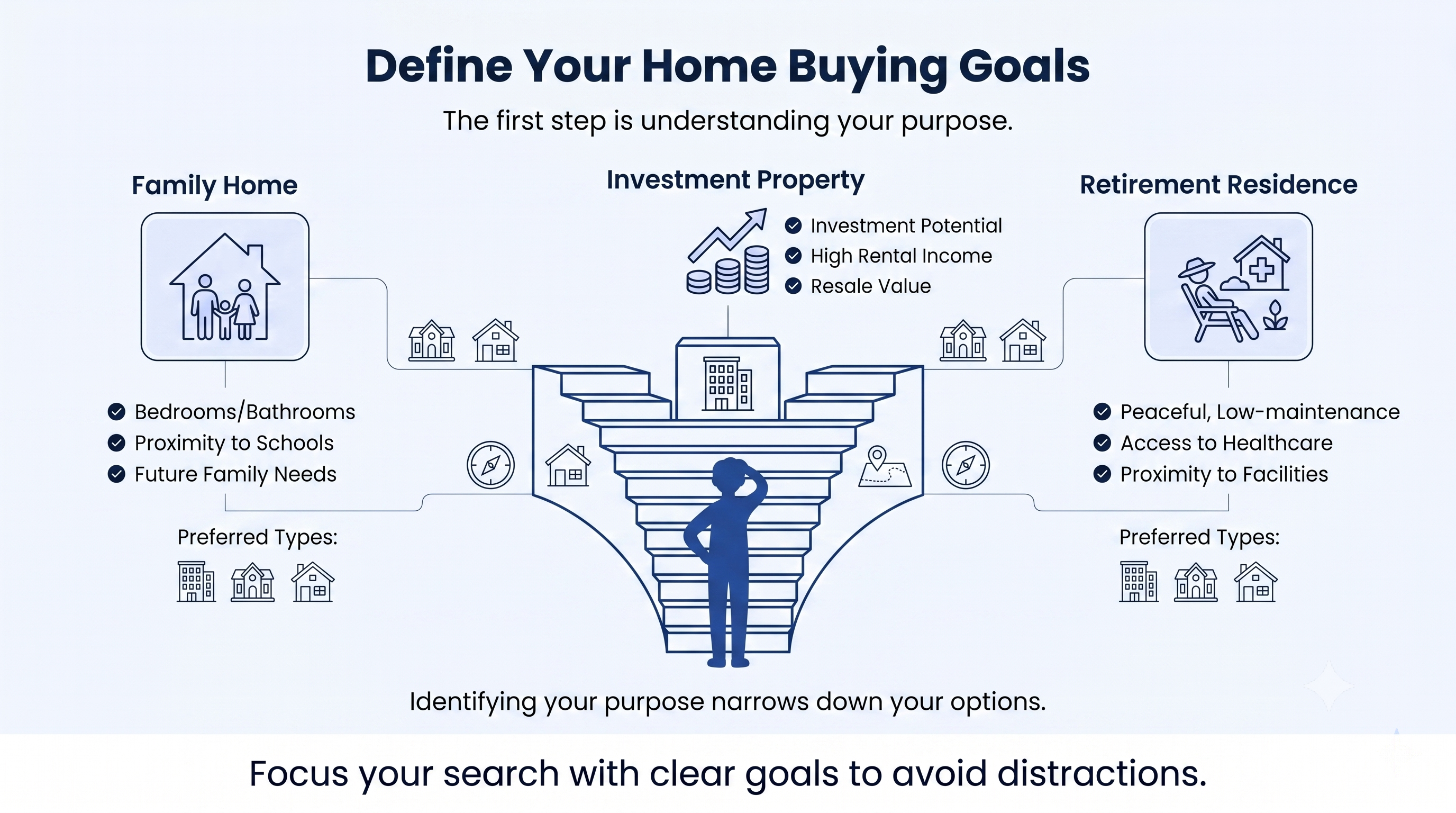
Identifying your purpose will help narrow down your options and focus your search.
Consider factors such as:
- Number of bedrooms and bathrooms
- Preferred property type (apartment, villa, independent house, or plot)
- Proximity to schools, workplaces, and healthcare facilities
- Future family requirements
- Investment potential and resale value
Having clear goals makes it easier to evaluate properties and avoid unnecessary distractions.
Set a Realistic Budget
Before exploring available homes, determine how much you can comfortably afford. Calculate your savings, monthly income, existing liabilities, and potential home loan eligibility.
When setting your budget, include:
- Down payment
- Registration and legal charges
- Home loan processing fees
- Interior and furnishing costs
- Maintenance expenses
A well-planned budget prevents financial strain and helps you focus on properties within your price range.
Research the Right Location
Location plays a crucial role in determining both your quality of life and the future value of your property. Look for areas with strong infrastructure, good connectivity, employment opportunities, educational institutions, hospitals, and recreational facilities.
Some important factors to evaluate include:
- Access to public transportation
- Road connectivity
- Safety and security
- Future development projects
- Property appreciation trends
Many homebuyers prioritize location over property size because a good location often leads to better long-term returns.
Create a Property Checklist
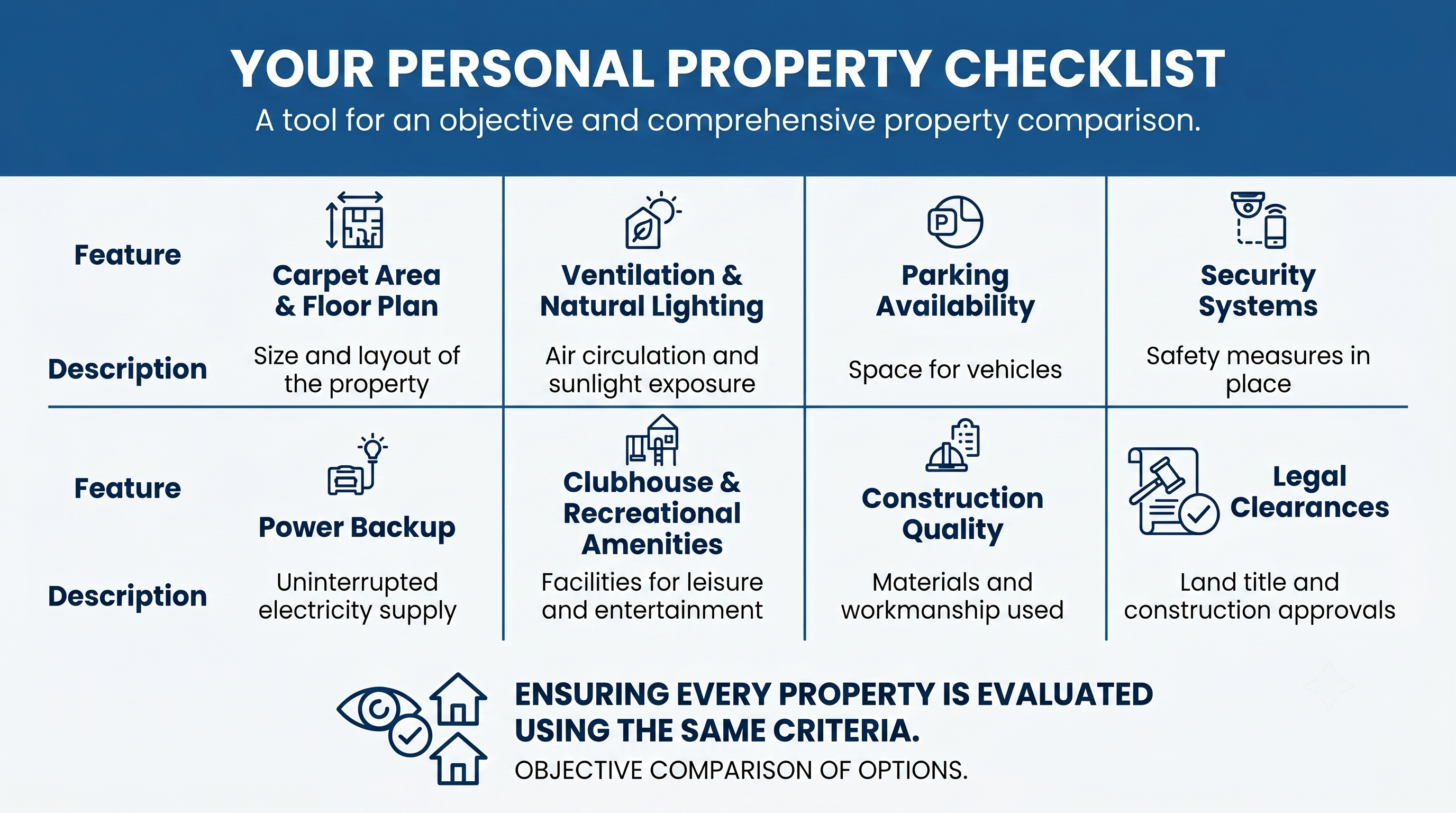
A property checklist helps you compare different options objectively. Include essential features and amenities that matter most to your family.
Your checklist may include:
- Carpet area and floor plan
- Ventilation and natural lighting
- Parking availability
- Security systems
- Power backup
- Clubhouse and recreational amenities
- Construction quality
This approach ensures that every property is evaluated using the same criteria.
Verify Legal Documents
One of the most important steps in the home-buying process is legal verification. Ensure that the property has all required approvals and documentation.
Check for:
- Title ownership documents
- Building approvals
- Occupancy certificates (if applicable)
- RERA registration
- Encumbrance certificates
- Loan approvals from reputed banks
Proper verification reduces legal risks and ensures a smooth transaction.
Evaluate Future Growth Potential
A home is not just a place to live; it is also a long-term asset. Research the area's growth prospects, infrastructure developments, commercial expansion, and demand trends.
Properties located near upcoming metro corridors, IT hubs, business districts, and infrastructure projects often experience higher appreciation over time. Understanding market trends can help you make a smarter investment decision.
Make an Informed Decision
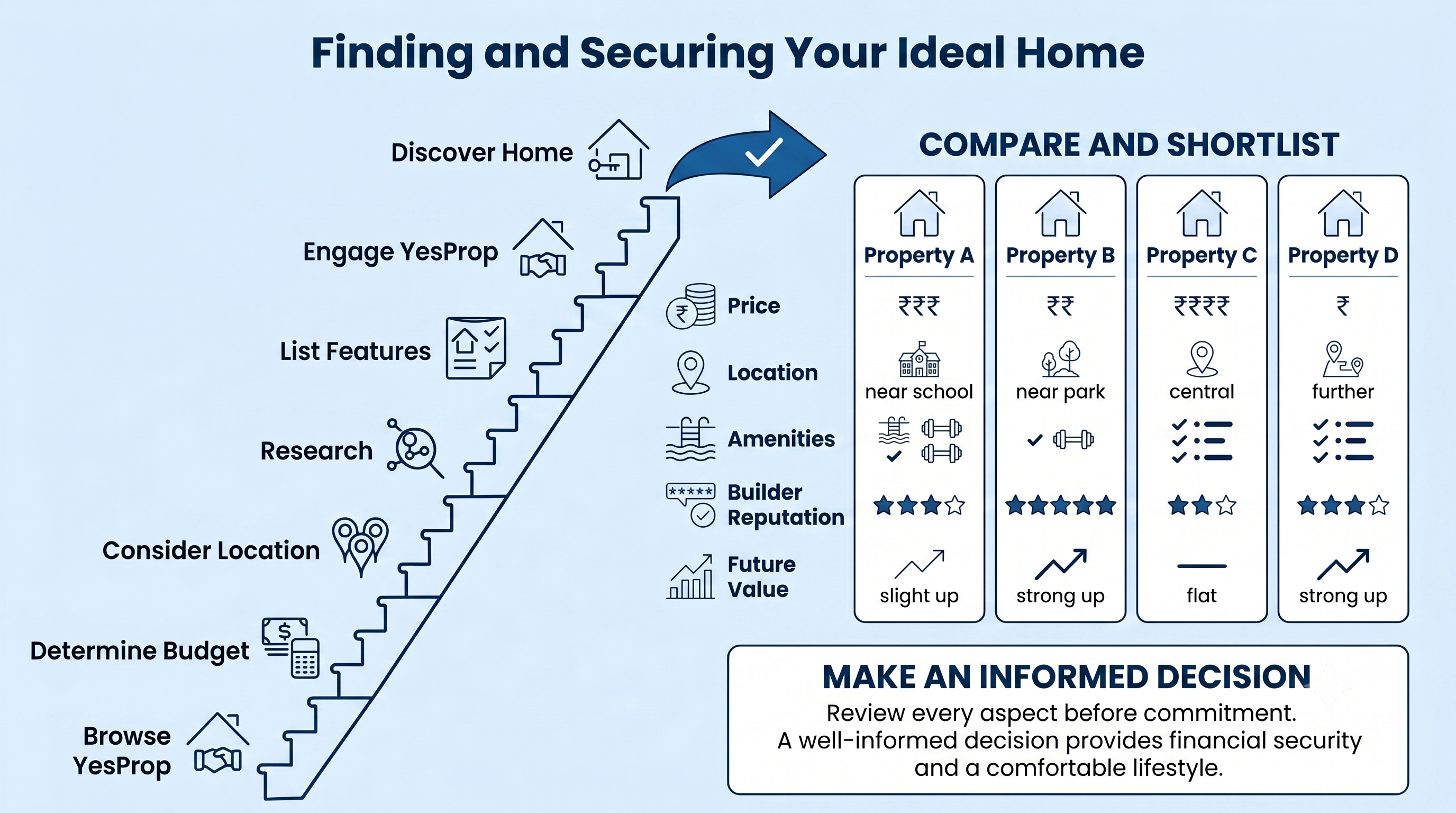
Once you have shortlisted suitable properties, compare them based on price, location, amenities, builder reputation, and future value. Take time to review every aspect before making a commitment. Home buying is a long-term investment, and a well-informed decision can provide both financial security and a comfortable lifestyle for years to come.
Looking for expert guidance to simplify your home search? YesProp can help you discover the right property based on your budget, lifestyle, and investment goals. With access to premium residential projects, market insights, and professional support throughout the buying process, YesProp makes finding your dream home easier and more confident.