

Buying a home involves more than checking the location, price, amenities, and floor plan. It is equally important to verify whether the property has received the required approvals and certificates. Two important documents homebuyers should understand are the Occupancy Certificate (OC) and Completion Certificate (CC). Although they are related to a completed building, they serve different purposes.
What Is a Completion Certificate?
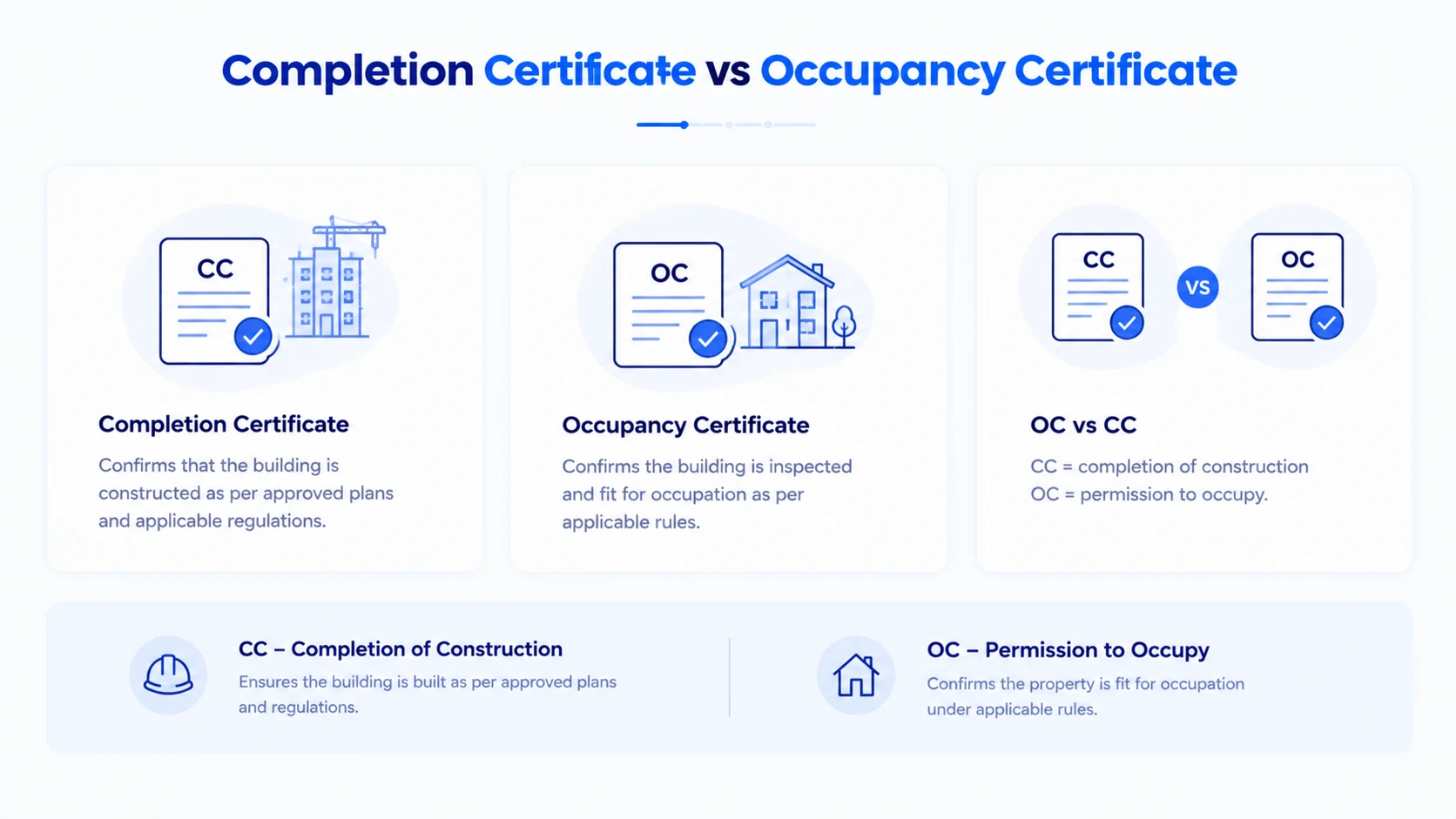
A Completion Certificate (CC) is issued by the relevant local authority after a building has been constructed according to the approved building plans and applicable regulations. It generally confirms that the construction has been completed as sanctioned.
The certificate may cover aspects such as the approved building plan, construction specifications, setbacks, and other applicable development requirements. For homebuyers, checking the availability and details of the completion certificate can be an important part of property due diligence.
What Is an Occupancy Certificate?
An Occupancy Certificate (OC) is issued by the competent authority after the completed building is inspected and found suitable for occupation, subject to applicable local requirements. It indicates that the property can be occupied for its intended use.
For buyers searching for RERA-approved properties in Hyderabad, checking the status of applicable approvals and completion-related documents is an important step. An OC can also be relevant when assessing whether a residential project has reached the stage where occupation is legally permitted.
OC vs CC: What Is the Difference?
The key difference between an Occupancy Certificate vs Completion Certificate is their purpose. A CC primarily relates to the completion of construction in accordance with sanctioned plans and requirements. An OC focuses on whether the completed building is fit and permitted for occupation under the applicable rules.
In simple terms, the CC is connected with completion of construction, while the OC is connected with permission to occupy. However, exact procedures and terminology can vary between local authorities, so buyers should verify the requirements applicable to the specific property and location.
Why Should Homebuyers Check These Certificates?
When purchasing apartments in Hyderabad, buyers should not rely solely on brochures or verbal assurances. Reviewing important property documents can help identify potential compliance issues before making a financial commitment.
Homebuyers should ask the builder or seller for relevant approvals and certificates and verify them with the appropriate authority wherever possible. This is especially important when searching to buy property in Hyderabad for completed or ready-to-move-in projects.
Other documents may also need review, including title documents, sanctioned plans, RERA registration details, building permissions, and applicable utility or local authority clearances. A professional property advisor can help buyers understand which documents are relevant to a particular project.
Make a Smart Decision
Once you understand the difference between an Occupancy Certificate and a Completion Certificate, review the property's documentation alongside its location, price, amenities, builder track record, and future potential. Proper document verification can help reduce risks and make the home-buying process more transparent.
If you're exploring premium apartments for sale or other residential properties, YesProp can help you identify suitable options based on your budget, lifestyle, and investment objectives. With access to residential projects, market insights, and professional guidance throughout the property search, YesProp helps make the process of finding the right home simpler and more informed.